
the PATCH
Design:
HOTEL + SCHOOL + OFFICE COMPLEX
Location:
Etiler, Istanbul
Institution:
Istanbul Bilgi University
Course:
Arch 302
Year:
2017
Advisors:
Prof. Dr. Emrah Altınok & Bülent Çetin
Challenge:
Design a vocational high school campus including a hotel, a school building and office spaces
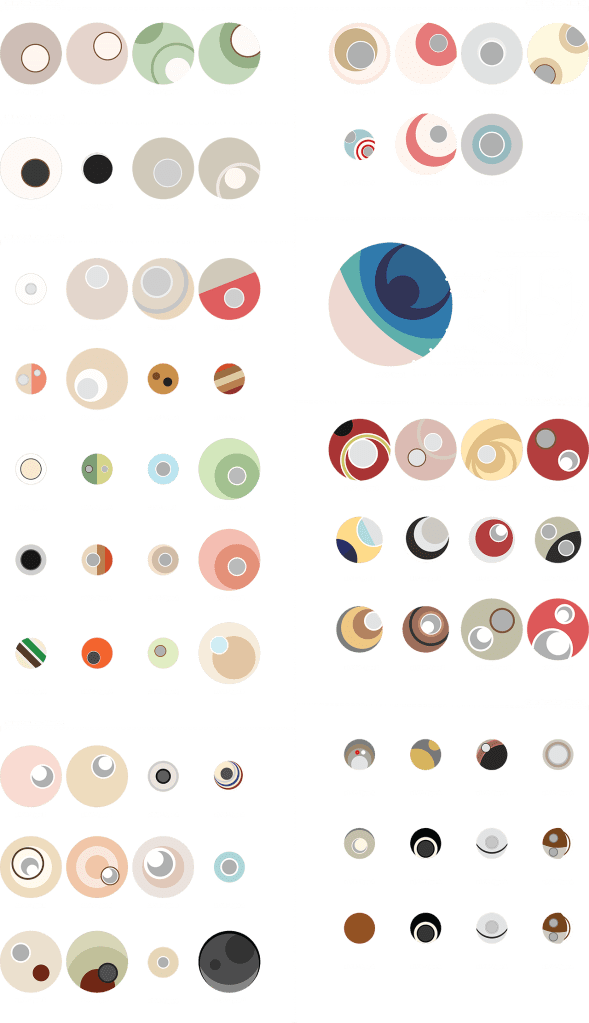
The project begins with an investigation of the surrounding neighborhood. Located in Etiler, the site sits within a relatively affluent area characterized by two main building typologies: (A) smaller one-to-two-story houses and (B) multi-story apartment blocks. Most of these structures were built in the 60s and reflect a modernist architectural language, marked by plain façades, elevated ground floors, and cubic forms. However, over the past few decades, many of the buildings have been altered with layers of paint or additional structures. These interventions now define much of the neighborhood’s visual identity. As a result, the initial analyses focused primarily on these layered characteristics.


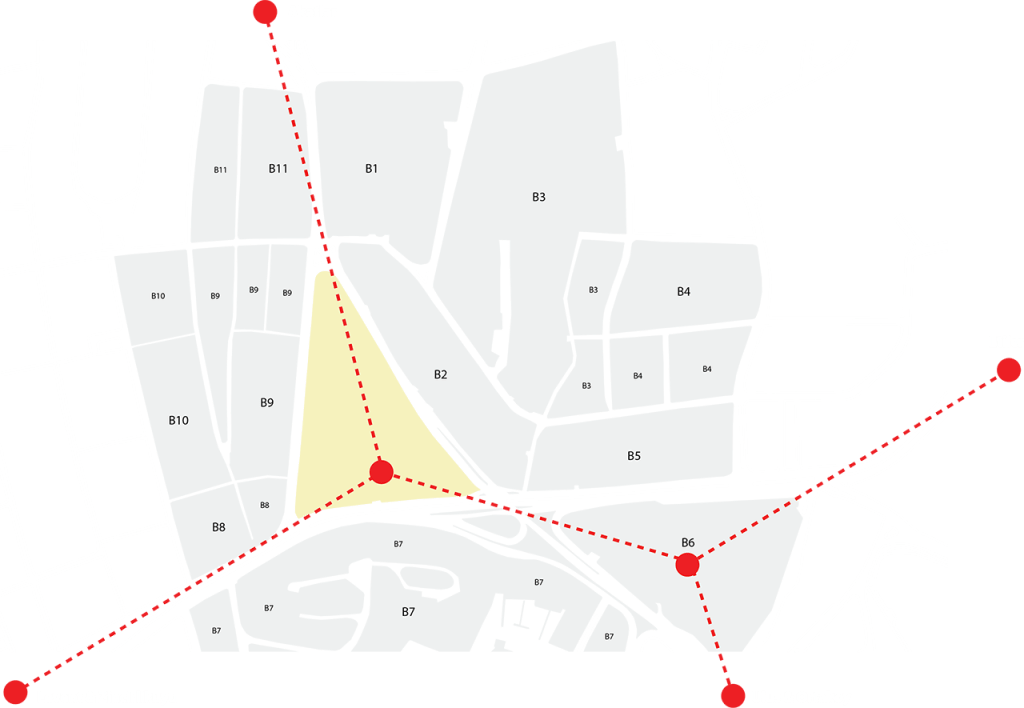
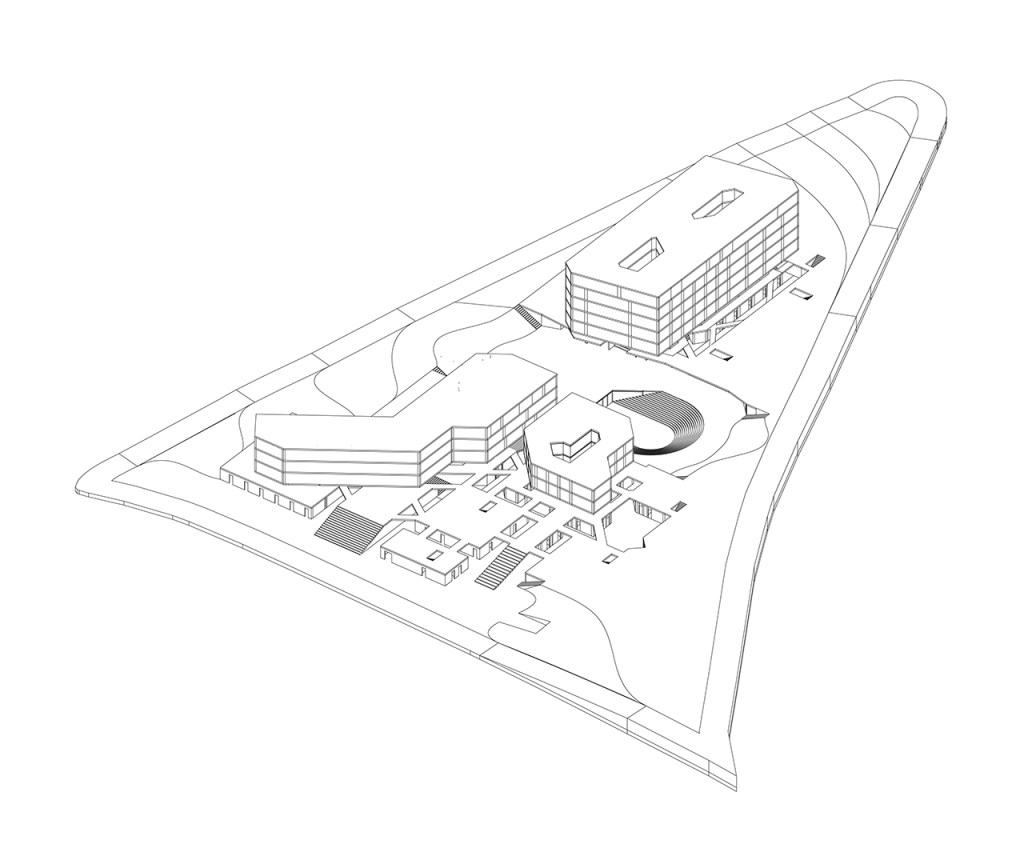
The triangular site is positioned at the intersection of several major axes, creating almost an obstacle in both pedestrian and vehicular traffic. As such, the primary concern of the design is to create a patch on the site – removing the blockage and reestablishing a smoother flow through the site. Multiple strategies for redirecting circulation were considered, shaped by two key factors: existing movement patterns and the permeability of the proposed structure. Early design studies focused on continuing existing circulation lines across the site/patch, while also exploring how the triangular geometry could be reoriented to invite movement inward from its edges.
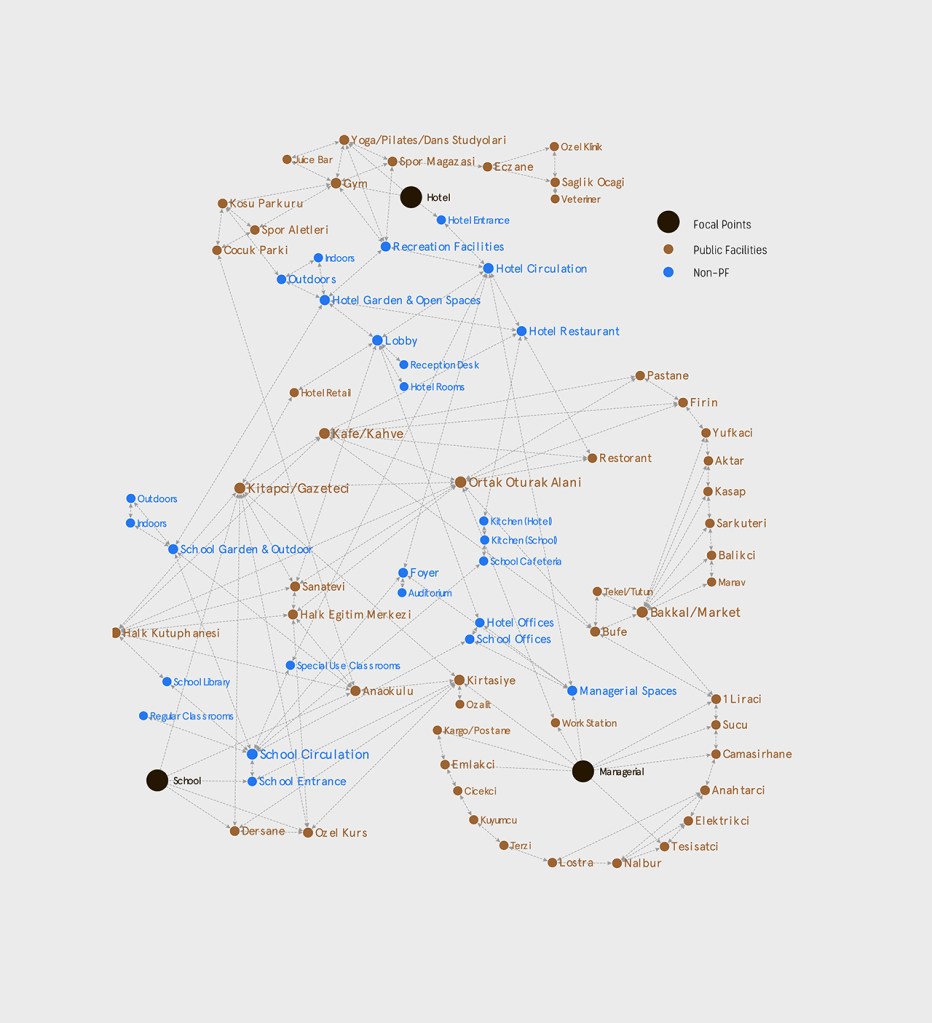
As a vocational school, the design incorporates three major programs—education, office space, and a hotel—along with a range of smaller supporting functions. These programs frequently overlap and share common spaces, presenting a unique challenge that demands meticulous spatial orchestration. Additionally, some programs, while not physically connected, require quick and convenient access between them. In response, the final design is based on a detailed programmatic mapping and achieves this complex organization through a network of bridges, strategically placed staircases, and thoughtfully planned circulation routes – almost like a large city university campus.
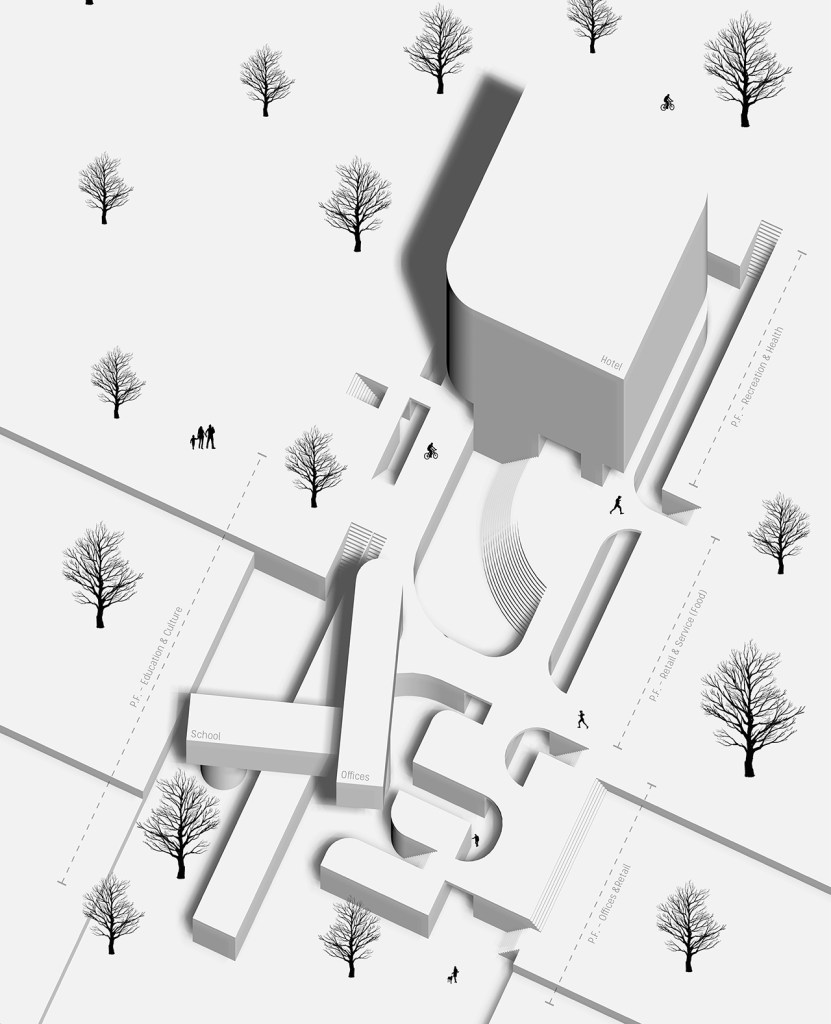


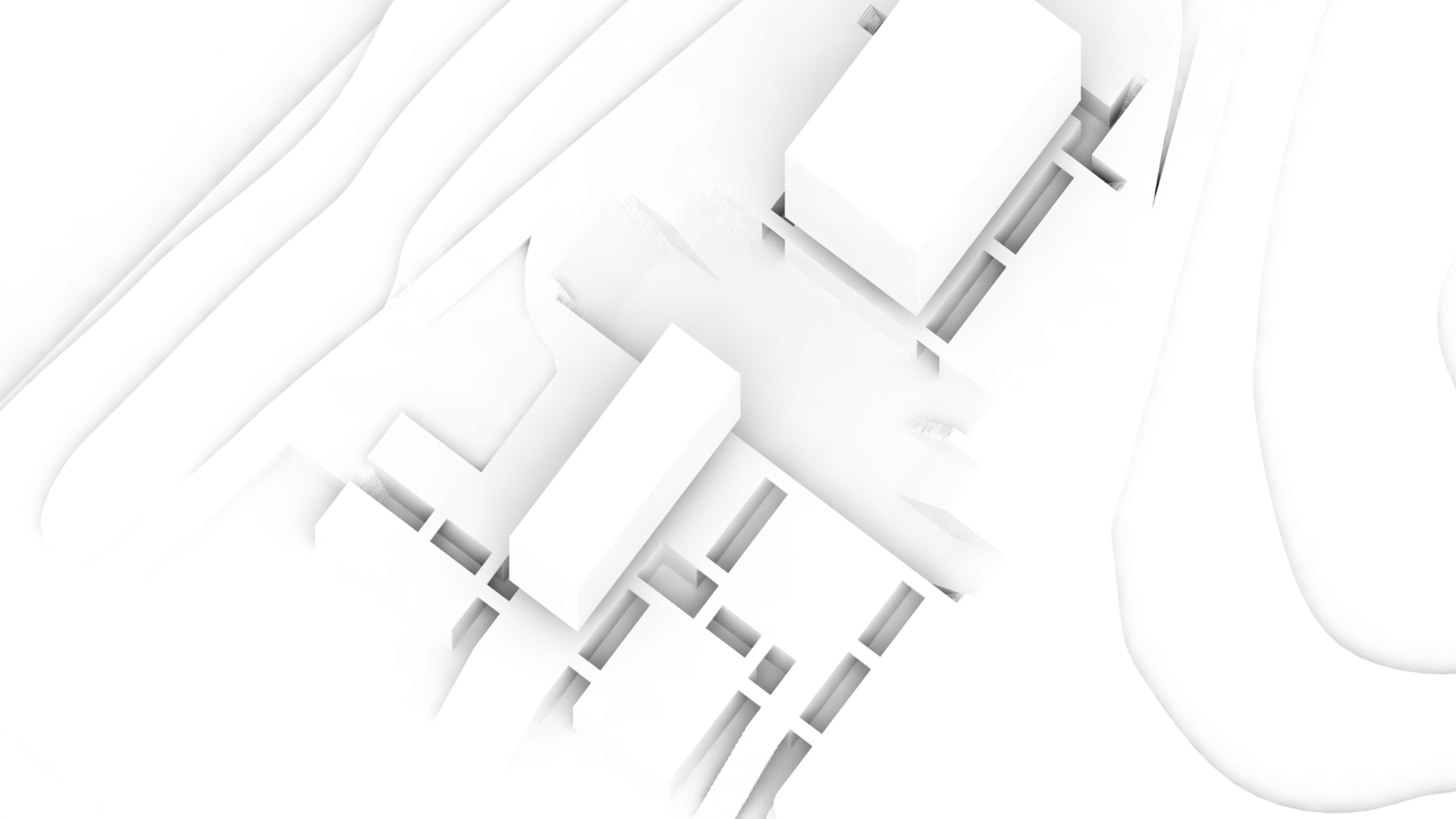
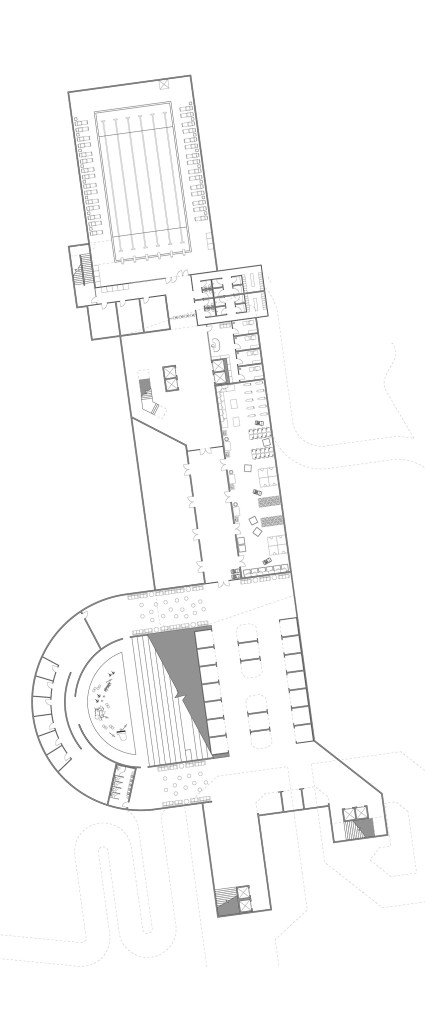
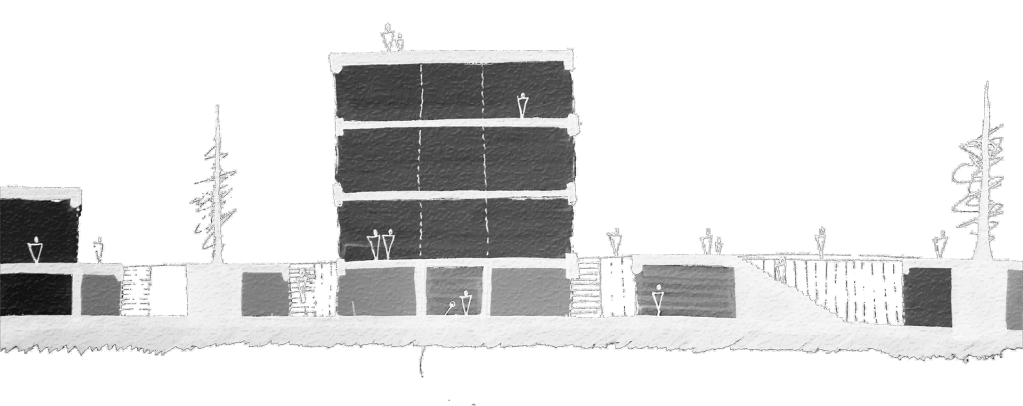
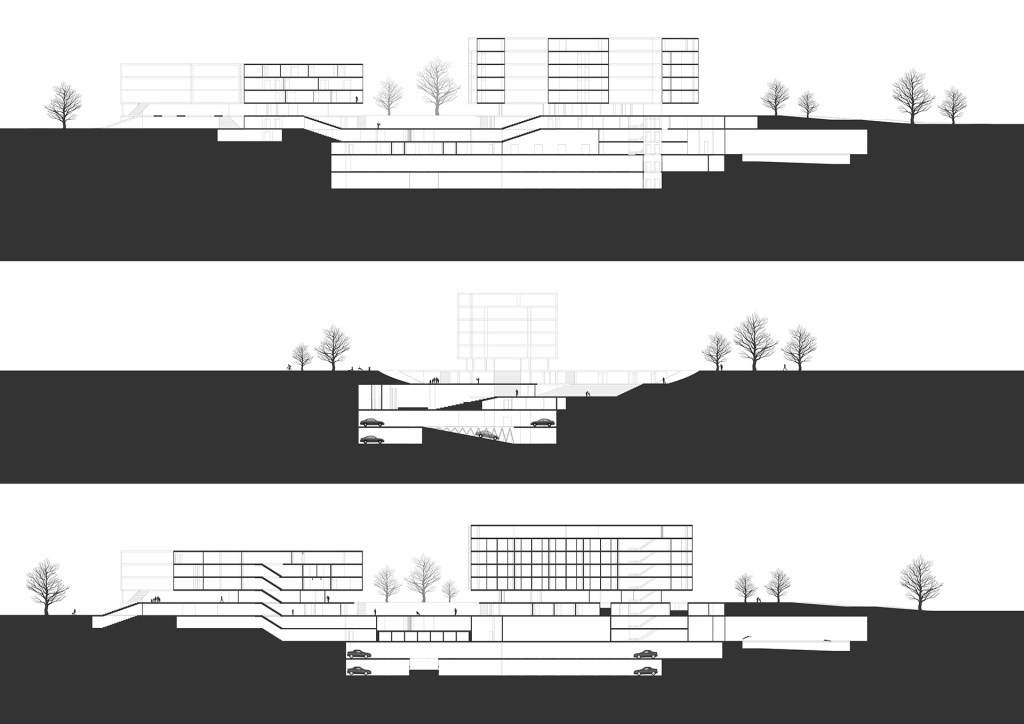
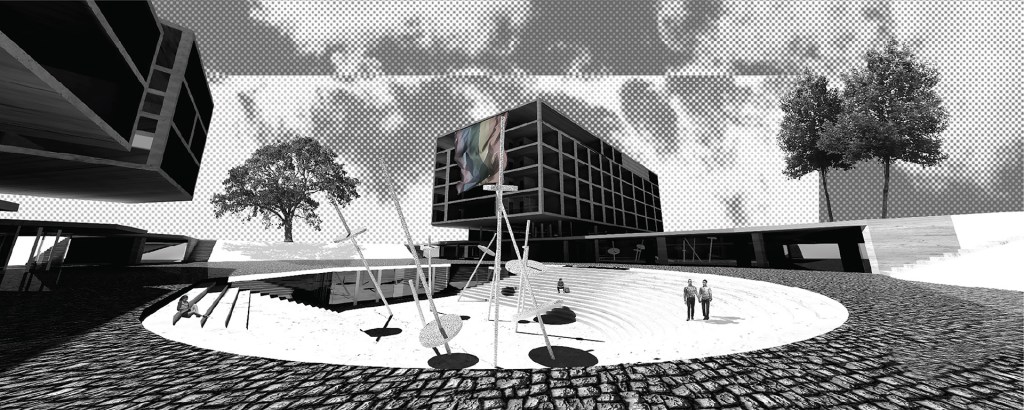
The final design takes advantage of the site’s natural slope, spreading across three interconnected ground levels, all accessible by pedestrian routes. Open on all sides of the triangular site, the layout invites movement through the campus, integrating it into the daily flow of the neighborhood. Strategically placed pathways serve both users and passersby. They follow along the axes which the locals will most likely often use. Such strategy blurs the boundary between institution and public space. Most of the essential school programs are embedded into the ground, organized around excavated circulation paths, while only three structures rise above. This creates a minimal silhouette and offers the surrounding community a green park.

 Alp Serif Besen